|
|||
| Home | Blog | Books | Bio | Interviews | Music | Essays | FAQ | Appearances | Contact | |||
| Fenway Fever | The Desperado Who Stole Baseball | The Boy Who Saved Baseball | Under the Baseball Moon | Choosing Up Sides | Over the Wall | |||
John Ritter's Blog APRIL 13, 2014 Choosing Up Sides: I'll let you in on a little secret. When my first novel, Choosing Up Sides, was published sixteen years ago today, I stood silent as to the real reason I had written the book. On the surface, Choosing Up Sides, set in 1921 Southern Ohio, was the story of a left-handed boy who is forced to go through life right-handed due to his family's religious beliefs. Under the surface, it was something else. As the late, great fantasy writer and mentor Ray Bradbury (Fahrenheit 451 and The Martian Chronicles) used to tell us young writers at the Santa Barbara Writers Conference each June, “Story is metaphor. Life is metaphor. It's all about metaphor.” And in this case the metaphor, only slightly hidden, slowly became evident over the years. Yes, the book was allegory (a parable, I liked to call it) for the religious-based discrimination suffered by ten percent of the population—but not the ones depicted in the story; not the left-handers. I was writing specifically about the age-old prejudice, pain, and sorrow justified by purely arbitrary beliefs heaped upon those among us who happened to be born gay. But in 1998, this was ground-breaking stuff. I remember the censorship of those days. I remember the book bannings of authors such as Nancy Garden (Annie on My Mind) and M.E. Kerr (Deliver Us from Evie), and I remember wondering if I could actually pull it off. Could I write an allegorical novel that argued strongly for gay rights while staying out of the fray and under the radar? Then, as I researched left-handedness, I discovered some surprising parallels between lefties and gays. Left-handers absolutely did suffer mental and physical abuse from church-inspired teachings, including torture and death. In addition, both the gay and the left-hander groups represent roughly 10% of the population, though both numbers are equally difficult to judge, due to a great number of those who, as we say in baseball, swing both ways. Beyond that, both groups can count an extraordinarily high number of creative artists among them—including innovative designers, graphic artists, songwriters, and musicians, as well as architects, lawyers, and—of all things—librarians. So the metaphor served me well. And when Choosing Up Sides went on to win the International Reading Association's Book of the Year Award and several other national honors, I decided to let the book run its course—as a baseball novel— without ever disclosing publicly what the story was really about. Over the years, I often spoke about the inter-connections between unconventional creative artists and “outside-the-box” baseball characters, such as lefties Babe Ruth, Casey Stengal, and Bill “Spaceman” Lee, to allude more and more to my real purpose in writing Choosing Up Sides. I witnessed many “aha” moments among students, teachers, and parents alike as I made statements such as, “Here was a boy, Luke Bledsoe, who was ridiculed, tormented, and abused simply because of who he was.” As Luke tells us on page one, “Couldn't help it. That's just the way I was born.” I still recall the Missouri middle school student I met in 2004 who had “identity issues,” his teacher informed me. She said the boy wanted to confirm that the story really had the deeper meaning he seemed to find in it. I met with them both and assured the boy that I did indeed intend the underlying message he seemed to grasp. He smiled and told me the book had really meant a lot to him, giving him hope that things could one day be better. Finally, just a few years ago, I felt that American society had evolved to the point where I could freely admit that I wrote this young adult novel in direct response to my outrage over a law passed in Colorado in 1992 that allowed open discrimination against the gay population in housing and employment. That law was overturned, but apparently old prejudices die hard. Enter Arizona Senate bill 1062, passed by the Republican-controlled state legislature in February 2014. According to news reports, its thrust was to “give business owners with 'sincerely held' religious beliefs the legal right to refuse service to anyone if it would conflict with those beliefs. “However, critics said the measure was anti-gay and would prompt boycotts that could be bad for business.” You think? This time around, though, the landscape was vastly different. Instantly, many diverse groups rallied to the opposition of such a disingenuous bill. Heavy-weight companies including Apple, American Airlines, Marriott, and Delta Airlines came out (no pun intended) against the law and warned that it could damage the state’s economy. Sports Illustrated reported that the NFL had started to investigate the possibility of moving next season’s Super Bowl away from Arizona. The Hispanic National Bar Association said that it had scrapped plans to hold its annual convention in Arizona next year, calling the bill an “injustice.” Even prominent Republicans argued against it, including Arizona senators John McCain and Jeff Flake and former presidential candidate Mitt Romney. Goodness. And then I read in The Guardian what I consider the clincher: Major League Baseball issued a statement condemning the legislation. That sentence brought tears to my eyes. I felt as if, after all these years, I had just rounded third base and was heading home. Finally, Republican Governor Jan Brewer stepped up to the plate and smacked the bill out of the park. She vetoed it. Game over. We are progressing as a nation, I truly believe. And as painfully slow as that progress seems to be for many of us, we do continue to grow. So Happy Birthday, Choosing Up Sides! And thank you, Gov. Brewer. Comments? To write John, replace the (at) with @ and send an e-mail to: cruzdelacruz(at)earthlink.net. SEPTEMBER 17, 2013 Announcing: A Fenway Fever Video Contest! When I was in high school, I dreamed of being a filmmaker. I owned a Super 8 camera which shot little rolls of 8mm film—with no soundtrack—and would last about 3-4 minutes. Later, when I went to college, I was able to use the school lab to add sound and final edits by hand (that is, scotch tape and a razor knife), then convert to 16 mm. Great fun and full of so many possibilities! But it was expensive. A ten-minute film might run $100 or more, and this was when minimum wage was about $1.50 per hour. At any rate, I would then show the movie to other students in my film class and, if brave enough, outside on the dormitory wall. Compare those dynamics to today. Video making is essentially free, special effects are virtually unlimited, and the whole world is your potential audience. Enter Jim Johnston, a teacher from Connecticut. I've never met Jim, but I know a lot about him. An intelligent, articulate man with a long career in education, Jim is now the vice-president of the New England Reading Association (NERA). I recently received an email from him describing his positive response to Fenway Fever and expressing his desire to inspire students to read this uplifting book by creating a video contest for Grades 4-10, based on the various themes found within Fenway Fever.
The contest rules and pertinent info can be found right here at the NERA website in PDF form. And the timing could not be better. Aside from the fact that the Red Sox are currently leading the American League East, after sweeping the Yankees this week, there is something even bigger in the air. The old college-kid peace activist in me rejoices at seeing so many everyday people—people who heartily supported armed intervention just ten years ago—stand up to declare their anti-war sentiments. This is the change in the heart—and heartland—of America I've been waiting for since 1969. That is to say, peace and love. And what is love except the flow of positive energies between ourselves? Or between each of us and Mother Earth? Or as Billee Orbitt might say, it's the interconnectivity of everything. It restores the divine balance to nature. It's how we put the unity back into community. So go for it, all you creative students of New England! Celebrate the Red Sox, celebrate the turning tides in America. Celebrate whatever it is you see in the novel and wish to put into a video for all to see. I cheer you on. I support you. And I look forward to viewing every single entry. Peace, out.
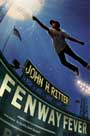
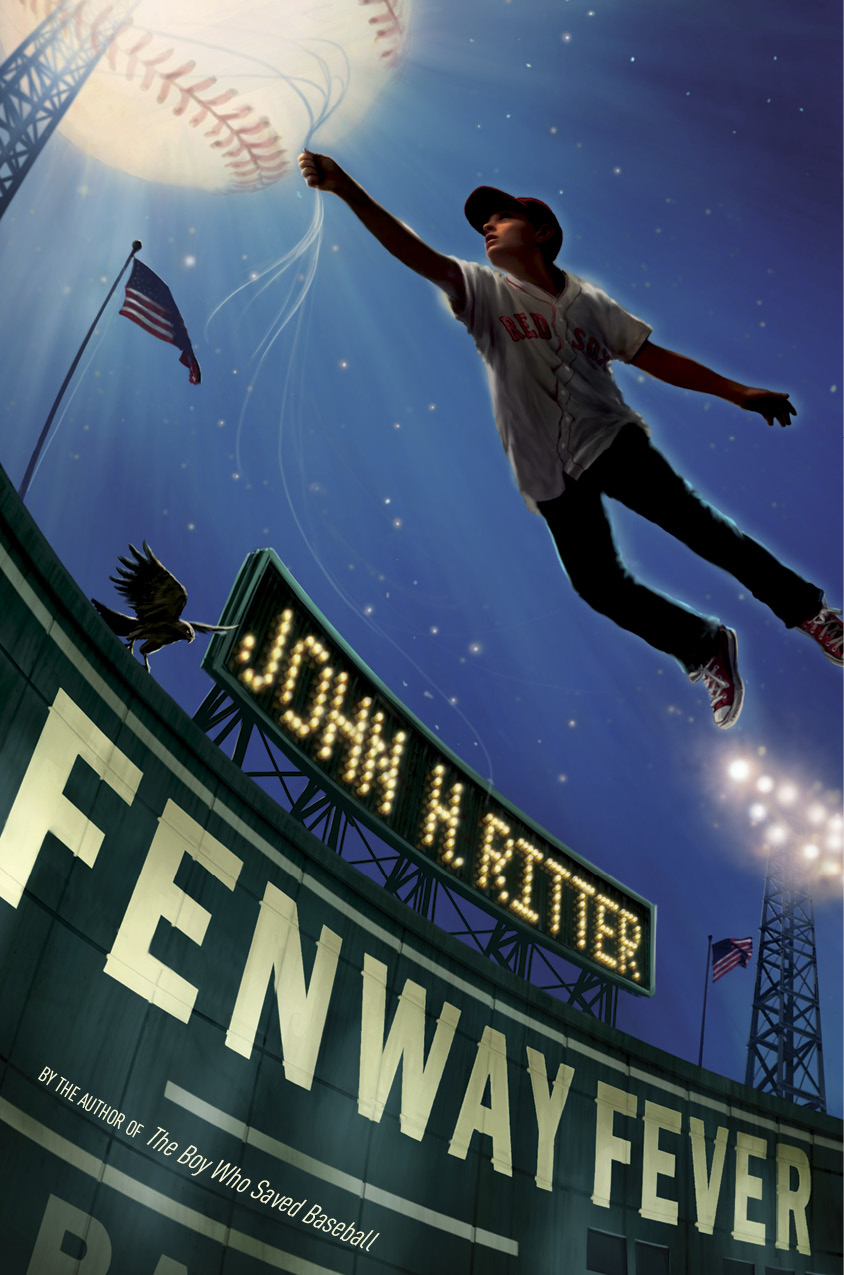
Comments? To write John, replace the (at) with @ and send an e-mail to: cruzdelacruz(at)earthlink.net. FEBRUARY 25, 2013 Outtakes in a Novel? Fenway Fever, the story of a struggling Boston Red Sox team making its way back to the top by restoring harmony and balance to Fenway Park, is coming out in paperback this month. And like the book itself, it is packed with unexpected knowledge and hidden truths. My publisher, Puffin Books, not only agreed to include book club and literary circle questions (lovingly provided by New York Times bestselling author Susan Vreeland), but they also agreed to insert several “outtake” scenes at the end of the book. These standalone scenes were either deleted for space considerations or they represent possible directions in the storyline I decided, for one reason or another, not to pursue. Though Fenway Fever is a story most importantly about one boy's ascension into a higher state of awareness (see the book cover!) and all the benefits that entails, it is also a story dedicated to the new Unity and Balance of Nature (the new Big Inning, I like to call it) which I and many others believe is sweeping the globe. Through Stats Pagano, the hot dog vendor's son, and Red Sox pitcher Billee Orbitt, Fenway Fever shows us how we can join with others of like mind and work for a better reality, a future filled with community support and planetary cooperation, while helping each other realize what life would be like when it is based upon the harmony and balance that the higher energies of love and compassion bring to each of us. Some of my early storylines reflected this slant to a, shall we say, multi-dimensional or off-planet extent. Then, in the course of writing the novel, which is never a linear pursuit, the scenes began to be orphaned, left unsupported by the developing plot, and thus never made the final edition. But they made the paperback! And I am so interested in the responses of readers, both those who have read the hardcover edition and those who will read the scenes at the end of the new Puffin version. So if you have had the chance to read Fenway Fever—or even if not—here are two examples of the cut scenes. The first one is not in the paperback, because, believe me, I have a hundred pages of outtakes, but it gives you the genesis of an idea that actually made the final book. The second scene, one based on my personal experience of having lost my mother at age 4, is one of several included in the paperback. Okay, here they are in rough draft form, as they appear in my "Scenes to Add" folder:
* * *
Comments? To write John, replace the (at) with @ and send an e-mail to: cruzdelacruz(at)earthlink.net. OCTOBER 15, 2012 What Is Your Game Plan? In a recent interview I talked about the separation we sometimes feel as we tramp or romp through life, a separation from other people as well as from our divine Nature, from God, or a Higher Source—whatever term you may use. In a recent blogpost, I wrote of Phil Ochs, the topical songster from the 60s and 70s, who felt so separate he ended his life journey. And that got me to thinking of the way baseball gives us the perfect metaphor, in a spiritual sense, for our travels through life and this feeling so many people have of being separate. Consider, if you will, the runner's journey. He starts at Home, at one with his Higher Source, so to speak, at one with his teammates and the unconditional love a team provides. But his call is to venture off alone, seeking and meeting the challenges of reaching base after base in the hopes of—what? His true goal is simply to return Home again. To return to the Source. Being thrown out, called out, flying out, getting picked off base—all the possibilities of ending his journey and letting his team down—are a constant concern. Still he perseveres as long as possible with that one goal in mind. Does he have to do it all on his own? At times, it may seem so. Say he hits a home run. But even that towering blast is not something the ballplayer achieved on his own. It took years of preparation, practice, coaching, and so forth, for the athlete to develop the skill to hit such a drive and circle the bases. Other times, his own teammates sacrifice for him, by bunting into an out or sending a sac fly into the outfield so the runner can tag and advance. Along the way he will have gained knowledge. What pitch did he hit and in what sequence was it thrown? How good is the pitcher's pick-off move? How strong of an arm did the center fielder display as the runner scored from second on a close play? All of this is valuable knowledge to be shared with others and put to use in other situations which may arise later in the game. For life is a game, I truly believe. We arrive ready to play, in the same way every hitter steps up to the plate with a plan as to how he will approach a particular pitcher. He “has an idea,” the hitting coaches like to say. Thus it is with life. We come into this life with a plan, a mission, an idea, in the same way a runner sprints off with an abundance of skill, training, and past experiences behind him. And after the game, we leave the field and go on home, back to “real” life, our lessons learned. And no matter how we feel along the way, we are never disconnected from our Source. No matter how dark the night, we are as much a part of the stars, as astronomer Carl Sagan used to tell us, as we are a part of our family of mankind. As Billee Orbitt tells Stats in Fenway Fever, “There's always a connection.” And there are always people in the grand stands of Life, people in the dugout, and people at home, watching, unseen and unheard, who are rooting for each of us. No matter what. Comments? To write John, replace the (at) with @ and send an e-mail to: cruzdelacruz(at)earthlink.net. OCTOBER 2, 2012 Phil Ochs: There But for Fortune Last night I watched a Phil Ochs (Phil Ochs Bio) documentary, "There But for Fortune," which I've had in my streaming Netflix queue for quite a while, gnawing at me. It’s been 36 years since his untimely death, and 45 years since my first introduction to his golden voice of outrage and dissent. And once I started watching, I knew why I'd waited so long to view the touching biopic. It stirred up something inside that would stay with me for days, here in the present day world where not enough has changed since the times in which, as Phil sang, "It's always the old to lead us to the wars, and always the young to fall." (And I hope you do click this link, because I really want you to hear that voice.) I first discovered the songs of Phil Ochs when I was 15, having just returned from an eye-opening summer (1967) in which I spent two weeks bumming around Haight Ashbury with my best friend Tony Robles (later to become Cruz de la Cruz in The Boy Who Saved Baseball), listening to Ashleigh Brilliant on a milk crate and mingling with both Hell's Angels and hippies in the panhandle of Golden Gate Park. But what hit me hardest last night was the realization that when I first heard Ochs sing "Here's to the State of Mississippi," I was the same age as the young adult audience for whom I’ve been writing my books for the past 15 years. As I sat there, I started to wonder whether my work would ever have the impact on a teenager the way Phil Ochs impacted me with his songs. I remember seeing him perform at UC San Diego in 1971 (I think), where he introduced the song Joan Baez had sung to fame, "There But for Fortune" by saying, "Or, otherwise known as, 'I Didn't Know You Wrote That Song.'" Ah, but that haunting voice... And, oh, the cheers when he sang, "I Ain't Marching Anymore," there at the height of the anti-Viet Nam War movement. That song is, sad to say, a ballad we need to hear today as much as we needed it back then. Why? Because loving one another, seeing the goodness even in the enemy, and flat-out refusing to participate in the killing of others is the only way we will ever achieve peace on earth. And I don't mean simply the absence of war, but Peace in the highest sense, that which comes from within. Heading home after the concert that night to my single-walled cockroach haven on Draper Street in La Jolla, I spied Phil inside Dick's Liquor standing next to the concert emcee with a gallon of red wine on the counter. "Of all the places," I remember thinking, "for my hero to be, looking forward to a cheap drunk when just an hour ago he was on top of the world before a thousand fans." Tony Robles was driving, but I didn't say anything, didn't tell him to stop so we could run inside and see if we could hang out. Didn't want to hassle a guy I knew, even then, was battling demons. Phil Ochs was perhaps the most honest songwriter America has ever known, which inspired me deeply, even though that trait may have led to his downfall. We so often shoot our messengers, particularly those who unearth the hidden truths we find too uncomfortable to face. But I honor him for his honesty, his passion for justice, and the fact that he never gave up the fight, when so many idealist hippies abandoned their principles and turned by the millions into so many "sold-out" yuppies. He did, however, give up one fight. Last night I learned that Phil Ochs was a lifelong manic-depressive—a human ailment which I have struggled with myself. And, yes, he died so young, because it was by his own hand. I would be dishonest to say those thoughts have never occurred to me, at times on a daily basis. But what I have come to realize is that depression is a fear-based condition. It's a mountain of a demon which will dog you mercilessly (ala, Winston Churchill's black dog), until the illusion that there's something to fear can be broken. I will never look down on anyone who ends the battle voluntarily. But I will say this: Healing is available. Depression suggests a feeling of separation, not just from other people or our life goals or the belief in our own abilities, but a separation from God or the higher Truth which is intrinsic to us all. Those who survive find that bridge between who they are physically and the divinity within. And that bridge is Love. It is available to us all. Ask for help, ask for guidance and support. I believe you will be surprised, as I was, at where that help will come from and how abundant it will turn out to be. I wish, now that I can see where my life journey has taken me, that Phil had been able to stay the course himself, so that, at this point in time, maybe he and I could sit down at Hodad's in Ocean Beach, at a window seat, sip a root beer float, and talk about the road. But I would never ask him why. For I know, as well as anyone, we all have "many reasons why." He took his road; I took mine. "And there but for fortune may go you—or I." Rest easy, good friend. And as a final tribute—I hope you don't mind—I wrote this verse:
Comments? To write John, replace the (at) with @ and send an e-mail to: cruzdelacruz(at)earthlink.net. AUGUST 1, 2012 You Can't Make This Stuff Up! It's not often that a grown man gets to indulge a childhood baseball fantasy, turn it into a full length novel, and predict the future at the same time. But at this point in the 2012 baseball season, that appears to be just what I've done with my latest novel, Fenway Fever.
Luckily, a boy never runs out of dreams. And though my passion for baseball never died, my prospects ended after one season of college ball. That's when I turned to writing. And by the spring of 2010, after publishing five novels, I started doing research on a family story of a baseball-loving hotdog vendor struggling to make ends meet in the wake of his wife's death. Soon my childhood came rushing back to me in the form of one of my deepest memories, the death of my mom when I was four years old and how our family drew upon the game of baseball to make our way through the trials of that event. The setting had to be Fenway Park. How else to honor my pop and his one time hopes for me? And where else could I find the stories of heartbreak and hope, triumph and travail worthy of what I dreamed would be a life-affirming baseball drama? I went wild on research. Virtually all of the characters and storylines were pulled from Red Sox lore. Second base is covered by “Dusty Doretta,” a combo of Bobby Doerr, plus current fave, Dustin Pedroia, and a sentimental pick, Mark Loretta. The Papa Pagano's Red Sox Red Hots stand serves up such tasty franks as the "Smoky Joe wood-fired dog," which honors a great Red Sox pitcher of 100 years ago, Smoky Joe Wood. The 2012 Sox rotation is anchored by “young True Denton” (Google those words backwards). Suffice to say, I had a lot of fun. Dipping deeper into my Teddy Ballgame days, my kid brother, Vonn, became the story's statistical guru, “Stats” Pagano. As boys we played “one-on-one” baseball, and it was Vonn who placed cardboard boxes and a pencil at each base in order to record every hit, every error, so that after the game he, at age 7, could calculate by long division our batting averages as well as slugging and on-base percentages. At age 9, after smacking a line drive into Vonn’s mouth, I was forced to become a dead pull hitter, ala The Kid, since it was the only way I could coax him back onto the mound to resume our imaginary games. Then Dad told me about The Kid's boyhood habit of carrying a bat everywhere he went. “He’d walk down the street swinging away,” Dad said. “He’d knock the tops off mustard plants and hit the daisies across the lawn.” Well, needless to say, I began to do the same. In Fenway Fever, Stats's older brother wears the Splinter's number 9 on his 16-and-under team, and becomes the real “Kid” in my story—the premier player I wished I'd been at that age. But it is Bill “Spaceman” Lee, the affable, eccentric, and outspoken Red Sox ace of the 1970s (who once called Fenway Park “a cathedral”) who brings the magic to Fenway Fever. I use him and Worcester-born Mark “Bird” Fidrych, another quirky '70s phenom, to form the composite character, Billee “Spacebird” Orbitt, and bring me onto the team. Billee firmly believes that a new Fenway curse is afoot, caused by a very real event in April of 2008. After a red-tailed hawk attacked a 13-year-old school girl touring Fenway, the Animal Rescue folks removed the hawk’s nest, as well as the egg within it. According to Billee, that moment caused the “butterfly effect”—first noted by a favorite boyhood author of mine, fantasy writer Ray Bradbury, who later became a friend and colleague at the Santa Barbara Writers Conference—to come into play. This led not only to the devastating “September Slide” of 2011, but the last place start of 2012. Billee soon partners up with Stats on a special high-flying mission (take a long look at the book cover) to undo the ill fortune and restore balance and order to Red Sox Nation once again. And even though the Sox spend much of May and June 2012 in last place, by early July, Stats and Billee have helped them slowly begin to rise in the standings, and by late August the Sox have caught and passed the Yankees and are back in first once again. According to Fenway Fever, that is. Fact or fiction? First off, I don't claim to be a prophet. So far, I'd say I made a lucky guess. But I do know this. A boy's love of baseball can do wonders. It can pull a family through rough times. It can sustain a novelist's career. And at times, it can work magic. Just ask Dustin Pedroia or Bill Lee or the immortal Kid himself. FOOTNOTE to this blog: On July 16th, the Hawk came back to Fenway! (That is, Ken “Hawk” Harrelson, former Red Sox All-Star and current Chicago White Sox announcer was in the booth! Please refer to Fenway Fever to note the significance of that event.) And Boston won, 5-1! After three months in or near last place, the Red Sox have begun to battle back so that going into today's game (8-1-2012), they are two games out of second place in the East, and four games out of Wild Card contention... Did the Hawk work its magic? We'll see. Comments? To write John, replace the (at) with @ and send an e-mail to: cruzdelacruz(at)earthlink.net. MAY 15, 2012 Fenway Fever Book Trailer After a great trip to Boston town—and a fantastic day at Fenway Park—I came back to the island of Kauai with photos and stories and feeling fully inspired to share what I learned along the way. The result, in collaboration with my entire artistic family, is this new book trailer celebrating Fenway Fever. From the galactic to the personal and all points in between, this trailer will take you to places in the novel that were for me almost beyond words. The whole trip was that way. And that hit home with me today, as I posted this clip. Not unlike the moment in the novel where Stats and Billee realize they alone can only do so much, when they saw that without the help of their "family," without the help of the "chi," the hawks, and the butterfly effect of each and every single act by each person in their circle of life—even Mama Pagano!—nothing could turn out the way they would wish. And I saw that today. All in all, this creation has been a joint effort reflecting the themes of family and friendship, love and faith I explored in the novel itself. And now having been to Fenway once again, having watched Big Papi, Pedroia, Gonzalez, and family in action, the magical connection between us all feels real. Thanks to Ric and Brian, Cheryl and Jolie, Kannon and Marlie, Janis and Rex, Chris and Liz, Bonnie and John, Sally, Ben, Justine, et al. Please take a look!
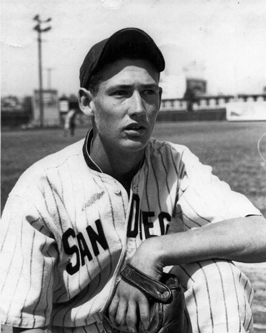
APRIL 15, 2012 Fenway Fever: My Ted Williams Connection Just the other day, I was asked, "What's your connection with the Red Sox and Fenway Park? Why write a book about it?" To be honest, back when I started writing this novel, in early 2010, I had the story of a hot dog vendor's whizkid son before I selected the ball park. My editor and I even discussed St. Louis, Chicago, Philly, and New York. But I come from San Diego, the hometown of Ted Williams, who still holds a hallowed spot in the hearts of all Padres fans. Plus, my father, a sportswriter who had covered Williams, regaled me and my brothers with stories about The Kid for years. Dad even told me I was built like Williams, tall and lanky, and since I batted left-handed and threw right, like Williams did, I often imagined myself to be another "kid-in-the-making." So when I first visited Fenway in 1999, that quirky, storied, mystical park cast its spell. Later, as I started researching this novel, it all fell into place. It had to be Fenway. The atmosphere, the people, and the legends. The story's secondary problem became the rebirth of the Curse (which of course presented me with its own jinx, since after a year of writing, the Sox were then picked to win the 2011 World Series). The characters were pulled from Red Sox lore. Even the hawk attack was a true story. It all fit. So, yes, there is a definite connection. Or as Billee "Spacebird" Orbitt would tell you, "There's always a connection."
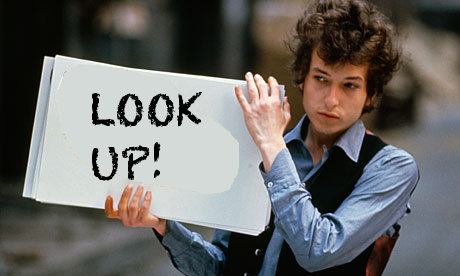
Ted Williams at age 19. Comments? To write John, replace the (at) with @ and send an e-mail to: cruzdelacruz(at)earthlink.net. APRIL 1, 2012 Fenway Fever: It's All about Love I am preparing to set off on a trip across the country to promote my latest novel, Fenway Fever. This is a ritual I follow every time I release a new book. I hit the road and hope to introduce the story to as many people as possible. Inevitably I get questions. And inevitably the questions include: “Where did the idea for this book come from?” For the first time, my answer will vary from the range of inspirations I've cited in the past. This particular story is one I have been writing for over fifty years. And in my heart I know, it is the last book I was sent here to write. The world is out of balance. I have known this since childhood. The wrong people control almost everything. The wrong decisions are made based on dishonest and phony reasons. It was that way before I was born and continues up to this day. The only difference is that the time and the opportunity to change this dark and dreary imbalance is upon us. Now. According to the United Nations, the money it would take, per year, to end world hunger is the same amount of money it takes to wage the wars in our world—for the next eight days. Yes, peace is far cheaper than war. Though it will take billions of dollars to feed the hungry, it is far more affordable to do so than to continue funding our militaries for a couple more weeks. This is the imbalance I want us all to keep in mind as we wonder if true earth balance—in ecology, health, education, wealth—can ever be restored. I say it can. And I say we do it now. All it takes is for enough people to agree, one at a time. As the hero of Fenway Fever, Stats Pagano, shows us, one boy can make a big difference. It takes enough “one boys” to become aware, to lay down their arms and walk away from the battlefield (metaphorically speaking or not), and refuse to serve the gods of anger, fear, and greed anymore. It takes the resolve of the population at home not to allow the prosecution of these returning “soldiers,” but to welcome them and at the same time prepare for the prosecution of those who started the wars in the first place. This is the balance I am talking about. This is the fearlessness it will take. It is time. Time to restore balance to Mother Earth and her people. Yes, we can counter the hate, the fear, the poverty, sickness, and devastation so many have visited upon the earth for centuries. All it takes is the resolve. This resolve inspired Fenway Fever. This human resolve is what it takes to restore the natural balance missing for so long upon our planet. Fenway Fever is about rising above our fears. It is about pulling for each other, recognizing the good and the divine in each other, and resolving to act accordingly. Mainly, it is about love. A small boy's love of a ball team, a ball park, the stats of a child's game. The love of family and the love of humanity itself. And as all of you who are aware of ancient prophecies handed down to various cultures by those whom the Hopi call our “star brothers,” it is about time. The time is now. Look up. Look around. We are the ones we have been waiting for. Pass it on. —JHR
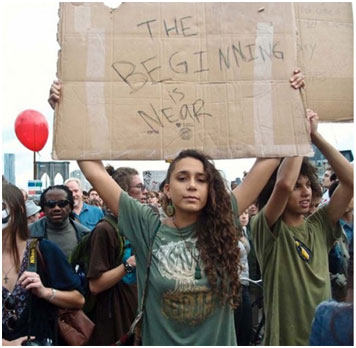
Comments? To write John, replace the (at) with @ and send an e-mail to: cruzdelacruz(at)earthlink.net. MARCH 2012 The Flight to Light During the Obama campaign, in 2008, people began to say to each other, “We are the ones we've been waiting for.” Some people purposefully misconstrued that slogan in order to mock it, and many simply did not have the information to understand it. But it was the truth. And never was that saying more true than now. The world, my friends, is changing. And we—so many of us—are doing the changing. It's not coming from afar. It's coming from within. The Arab Spring, the Occupy movement, the forced resignation of so many corrupt bankers and politicians around the globe are all signs of the times. And, as Shakespeare once said, “The times, they are a-changin'.” Well, our Shakespeare said it. So now is the time for all good souls to come to the aid of their planet. Look up. Stand up. March! Finally enough of us see what's happening. We are connecting the dots so that we can see right through the right wing politicos, who are using the only tactic left in their arsenal—fear—in order to try and disrupt the march toward world peace. The talks about preemptive strikes against Iran to prevent that country’s possibility of producing a nuclear weapon; the possibility of a terrorist attack on New York City; the possibility of another devastating earthquake in Japan; the possibility that North Korea may become sufficiently menacing to cause war in Southeast Asia. All of these messages of fear are designed to control a populace that is no longer falling under their control. Why? Because enough of us are beginning to see the light. “Get up! Stand up! Stand up for your rights,” as Bob Marley sang. “We sick and tired of your ism/skism game. Dyin' an' goin' to heaven ina Jesus' name.” And I love it! I love the flight to the light so much I wrote a book about it: Fenway Fever. Check out the cover and you'll see what I mean.
The Curse of the Bambino (i.e., Communism, Terrorism, or whatever “ism” you want to insert) has been broken. And no matter how much the war merchants want the fear to return, we don't have to go along. We have it in our power to just say no. No more war. No more staggering debt. No more lies about oil and gas, yada, yada, yada. And no more waiting for someone else to come along and put the world back into balance. We can do that. And we're already here. Look up. Stand up. And if you are still in doubt,let Billee Orbitt and Stats Pagano show you how it's done. As the Boston Red Sox pitcher, Billee, tells Stats in Chapter Two of Fenway Fever (the latest installment uploaded today), if there is a new Curse, that is, a new fear, a newly manufactured ism to worry about, to go to war over, et cetera, “Then it'll be up to guys like you and me to stop it.” For they, and we among them, are the ones we have all been waiting for. Peace. [Fenway Fever is due out on April 12, 2012. To pre-order your copy, go here. Comments? To write John, replace the (at) with @ and send an e-mail to: cruzdelacruz(at)earthlink.net. FEBRUARY 2012 Guest Blogger: Asa Dusa O'Rourke, from Dublin
As those who follow my blog can see, I'm way behind this month (Feb 10 already!!). I'm preparing for a big Fenway Fever promo tour, so this month I'm turning over my blog post to a guest blogger, Asa Dusa O'Rourke, from Dublin, who was one of my early readers for Fenway Fever and has a few good words to impart. Of course, following Asa's post, you will find, as promised, Chapter One of Fenway Fever, to be followed by Chapter Two next month. Take it away, Asa! Thank you, Mr. Ritter, my good man, for this rare opportunity to connect with the literary baseball crowd across the pond. I dare say, my message today, actually has much to do with your new novel. This is to say, the portion of the tome dedicated to flying high, dedicated to the upliftment of humankind out of the slavery of war, pollution, disease, and poverty. The book jacket alone is enough to send my heart soaring. To think, old chap, that the End Times are upon us and, marvel of marvels, they are not catastrophic! They are, as you so deftly describe, uplifting. And so it has been prophesied by many of the aboriginal cultures for millenia. That is, the pure belief systems of yore, unmarred by the aberrations that have penetrated the major religions, have often spoken of our divided families coming together in peace and love at last. Sadly, some of these, such as the Mayan prophesies, have been changed to accommodate the beliefs of the various persons involved, and as you know many interpret the end time as the end of the world and a time of destruction. This is simply not so! This year, 2012, marks the completion of a major galactic cycle, true, but this year also marks a new beginning of an era of joy, peace, comfort, and abundance not seen on our globe in over thirteen thousand years. Exciting times! But for the fact that many creative ideas have been deliberately suppressed, we would have been well into the age of abundance already. Very soon, however, a mass of new ideas will be released, and many, for instance, are variations of devices that supply free energy. That in itself will solve some really pressing problems that are causing so much poverty and low standards of living. Threats of war still rumble on, but despite the sabre rattling, new wars will simply not be allowed, and all old wars are winding down. Their time is past. So please do not succumb to the fears. It is up to us to think of peace and love and place our energy where it will do something positive. The financial situation continues to occupy the headlines, but it will soon resolve, and we will witness the start of a completely new approach to banking and the whole nature of finance. Debt will be eliminated and never again shall we be burdened with it beyond our means. As Mick and the boys from our side of the pond once sang, “Let the good times roll!” Please accept my gratitude, John H. Ritter, for allowing me to post this guest report. I am Asa Dusa O'Rourke, leaving the station and reminding all, 'tis a wonderful time to be alive, to be a part of such a grand event as Planetary Ascension. All aboard! Click here for Chapter One of Fenway Fever. Comments? To write John, replace the (at) with @ and send an e-mail to: cruzdelacruz(at)earthlink.net. JANUARY 2012 2012 Is Upon Us This is it, folks. This is the year we've all been waiting for—whether you know it or not. And for those who don't, you soon will. The magical year of 2012 is upon us! And my latest novel, Fenway Fever, due out in April, is based upon the inspiration, the majesty, the excitement, and the prophetic expectations of this emotion-laden year and all it has in store for us. And what better place for an uplifting and emotional story to take place than within the hallowed walls of Fenway Park in Boston, Mass—a magical ballyard which not coincidentally celebrates its 100th year in April 2012. Bill “Spaceman” Lee, the ace Boston Red Sox pitcher from the 1970s, once called the sacred confines of Fenway a cathedral. In my novel, Bill Lee (known in the story as Billee Orbitt) takes a starring role and partners up for a special mission with a young boy who believes his family's long held front row seats down Fenway's third base line are “heaven on earth.” Both are right, as we come to find out, and in deeper ways than we may at first suspect. In fact, the heavenly nature of this century old downtown ballpark plays a central role in my story. For as the book opens, it seems that someone—maybe even the Red Sox themselves—may have inadvertently reignited the ancient and dreadful Curse of the Bambino, which they had deemed vanquished, over-and-done-with, and kaputt, back in 2004 when the Sox won the World Series. And again in 2007. Ah, but then came '08, '09, '10, and the devastating September of 2011. And as I wrote in my October 2011 weblog post, in the early morning of September 29, 2011, out of the mouth of a Babe, a shrill and tortured cry went up through all of Red Sox Nation. “Curse on!” Enter Billee “Spacebird” Orbitt (yes, there is also a dose of Mark "The Bird" Fidrych, in the mix) and his young ciphering sidekick, Freddy “Stats” Pagano, who hope to get to the bottom of the mysterious bad luck streak and once again restore balance to the fens and bogs of Boston Town. So let me take you there, for a sneak peek inside my upcoming novel, Fenway Fever, right to the very big inning, as it were, Page 1, Chapter Zero, the start of it all, and you can see for yourself what these guys are up against. (And please come back next month for Chapter One, to be followed each month with another chapter until the book hits the stands on April 12, 2012.) Click here for Chapter Zero of Fenway Fever. Comments? To write John, replace the (at) with @ and send an e-mail to: cruzdelacruz(at)earthlink.net. DECEMBER 2011 A Holiday Snapshot via Fenway Fever There is one scene from my soon-to-be-released novel, Fenway Fever (Penguin, April 2012), which I'd like to talk about this month. It's not a Christmas scene—in fact, it takes place on Father's Day. But as I look back into my boyhood, I find what I remember most about the Christmas season is the way my father, despite his sorrows, never failed to bring gifts and cheer into our motherless home. The novel spotlights a family of three. Pops Pagano, a second-generation hot dog vendor outside the hallowed gates of Fenway Park in Boston, and his two sons, Mark, 15, the athlete, and Stats—our hero—a soft-spoken cerebral child of 12, who was born with a balky heart. Reminiscent of my own dad, Pops Pagano is a gentle giant, often exuberant, even charismatic, except when it comes to speaking to his sons about their mom. It has been four years. Here we go. Chapter 24 from my latest, Fenway Fever:
* * * Every Sunday during baseball season, Dad made us popcorn in a huge black skillet while we scrawled out on the davenport and chairs to watch the Major League Game of the Week. We three boys, like Stats and Mark, grew up motherless with a father who struggled mightily, especially during the holiday season. Unlike them, however, we had an older sister who helped to ease our loss of feminine presence, guidance, and wherewithal. It is to her, our sister, Carol, I have chosen to dedicate Fenway Fever. Merry Christmas, angel. And Merry Christmas, all. May the love and light of this new beginning, personified so many times over the decades by my big sis, shine upon and within each of you, lifting our Mother Earth high into the heavens for now and forever. Much love, Comments? To write John, replace the (at) with @ and send an e-mail to: cruzdelacruz(at)earthlink.net. NOVEMBER 2011 The Big Inning Is Near! Have you ever wondered why the most phenomenal aspects in life are the most difficult to replicate? Consider chance communication with spirits and bottom-of-the-ninth game-winning home runs. Both involve surges of energy the sources of which are not easily defined or called upon at will. On Friday, November 11, 2011, often referred to as 11-11-11, expect another surge. Expect it to be big. Combine all the energy generated by every Big Papi-style walk-off homer in history, every come-from-behind miracle victory, every first kiss. It will be bigger than all of those by a thousandfold. To each of us. Personally, I have always been wary of people who will not entertain a leap of faith. They are the ones who would hold me down. For in many cases, faith in the unfathomable was all I ever had. From the time I was nine and rooting in the schoolyard via transistor radio for the underdog Pirates to bounce back in the seventh game of the 1960 World Series, I have been shown the rewards of faith. The truth is, there are far more unexplainable things in this universe than the officially explainable. Ask a light hitting second baseman named Bill Mazeroski. Ask a Wall Street Occupier whose mild-mannered actions have fired up the nation's imagination of what could and should be. There are days in which the meek do inherit, and we are now in the midst of those potent and mysterious days. Mankind's problem has always been that we would rather explain away a mystery in simple terms than consider a benevolent theory beyond our ken and comfort. So in faith, I go. Leaping onward, upward, open to the energy of the day. And beyond. November 11 will come and go. But I do believe the good energy coming with it will grow. Love will finally win out. Of course, each of us has a choice. Please take from here what rings true for you. Be calm. Be at peace. With much love, I write from the source of all imaginings. All is well.
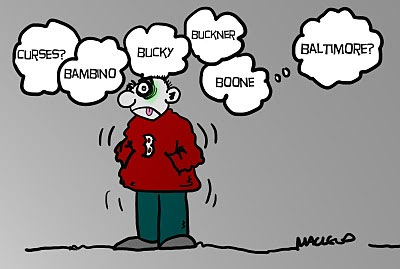
OCTOBER 2011 Another Curse Brewing in Boston Town? Oh, what a night. Late September back in oh-one-one (the song will go), what a day and what a night. I guess that must be why they call it the Wild Card, right? On Wednesday, September 28, the final day of the 2011 season, four teams went into four different games tied for the chance to be the Wild Card in their respective leagues. In the early morning hours of 9/29, only two remained. There would be no ties, no Wild Card play-off games. The issue was settled. But it was all done by magic. And in Boston they will tell you, it was black magic. This, of course, is a town whose populace retains a sharp knowledge of the curséd crafts. Remember Salem? What about the Curse of the Bambino? Is it possible that the fates have delivered yet another Red Sox curse? Well, let's see. First of all, full disclosure. I believe in magic. At least, in baseball magic. I believe there is a built-in cosmic force which pulls on all of us, but especially on baseball players, so that we may attain during our lifetimes a deeper understanding of the universe and our place in it. Some call this force balance. Some call it karma. Casey Stengel called it managing the Mets. (“Does anyone here know how to play this game?”) Nevertheless, curses are a part of it, a part of the cosmic pull. And how we handle them, I believe, helps determine how far up the spiritual ladder we climb. Let's look first at the Cinderella Cardinals of St. Louis, one of the Wild Card Four. They simply won their game, beating the Astros 8-zip. But they had to wait and see what the Braves did versus Philly. A Braves victory would mean a play-off tomorrow, Braves v. Cards, to determine the National League Wild Card team. And the Braves were winning...until the ninth, when the Phils, who were already assured a spot in the post season, tied it up, 3-3. The Braves, however, are cursed as well. This one would go 13 innings (naturally), and the Phillies would prevail. Meanwhile down in Tampa-St. Pete, the Yankees, who had also earned a spot in the postseason, were busy dispatching the upstart Tampa Bay Rays and doing the Boston Red Sox—of all teams!—a big favor by beating the Beantowner's only impediment to the postseason, and doing it so neatly, so sweetly and completely, leading 7-0, in the 7th. Okay, but hold that thought—for this one was far from over. At the same time up in Baltimore, the Boston Red Sox were leading the Orioles, 3-2 in the 7th. Freeze both of those scores, in Tampa and Baltimore, and the Red Sox would not only avoid a playoff game versus the Rays tomorrow, but could waltz into the playoffs as the American League Wild Card—putting an end to the horrendous slide they suffered thus far in September, having lost two-thirds of their games for the month. Ah, but then it began to rain in Maryland. The Sox v. Os game would freeze all right, for over an hour. But the Yanks and Rays would continue to play. Imagine now, if you will, the entire Boston ball club gathered in the visitors' clubhouse at Camden Yards watching the NY-Tampa game on TV, confident of their prospects, as the Rays enter the 8th inning, down 7 runs—and proceed to load the bases. They even score a run. Then two. Then three. A little late for a comeback, but with two outs, they are climbing back into the game. I can see Big Papi elbowing Ellsbury, saying, “Hey, kid. No problema,” and giving him a wink. That would be right about the time Evan Longoria steps up and belts a three-run homer. Overall, the Rays score 6 runs in the eighth and now trail only 7-6. The Sox are still watching...and hoping and praying...all the way to the bottom of the ninth, where it's two outs, two strikes on the batter, Dan Johnson, the Rays last chance. But, by pure “coincidence,” this is the same guy who has already blasted two game-changing, season-altering home runs vs. the Sox, one in 2008 and one in 2010. The Red Sox hold their breath as Yankees reliever, Scott Proctor, faces Johnson and delivers a 95 MPH fastball. And Johnson yanks it down the line, where it just barely clears the fence! Tie game, 7-7 after nine full innings. Okay, hold that thought too. For this one will go 12. Meantime, the rain stops in Baltimore. The Sox retake the field and get through the 7th and the 8th, still ahead by one. In the 9th, they put runners on first and third, no outs, with Big Papi and Adrian Gonzalez coming to bat...and they fail to score. No sweat. No curse. Still ahead. And in the bottom of the ninth, their ace closer, Jonathan Papalbon, strikes out the first two batters he faces. So far, so good. Then bang, a double puts the tying run on second. Still no worries, as Pap gets two strikes on the next Orioles hitter. He bears down and hurls a 96 MPH four-seamer. Ah, but it was not enough. Bang again, another double. The Os have tied the game, 3-3. Okay, Papal-visit blows the save, but he has not lost a game all season. And that record holds all the way until the next batter singles, driving in the runner on second. Game over. Orioles win, 4-3. Curse on? Maybe not, maybe not. Down in Florida, the Yankees can still beat the Rays, which would force a Red Sox v. Rays playoff game tomorrow (now today, since it's after midnight) for the AL Wild Card berth. Back again the Red Sox slog into the visitors’ clubhouse. The TV has the Rays game on, but not everyone is watching. Not everyone is even inside yet. For within three minutes, that game, in the bottom of the 12th, becomes history too. On a one-out, bases empty, two-and-two count, Evan Longballia goes long again, as he delivers the final blow to the Red Sox season—a shot heard 'round the whirled series of baseball on this fateful night! The Rays win, 4-3. They will go to the playoffs. The Red Sox will go home. A-cursed? When the month of September started, the Red Sox led the Wild Card standings by nine games. However, after winning a double header on August 27, the Sox did not win as many as two games in a row for the rest of the season. In September, they lost 20 out of 27. No playoff contender in history had ever fallen so far in the season's final month. And as the sun rose the next morning over the Gate of Heaven cemetery in New York, baseball fans everywhere could fairly hear none other than the spirit of the Great Bambino, George Herman Ruth, born and raised in Baltimore, call it out. "Curse on!" Oh, what a night.
Macleod's Cartoons (9-27-11): "Boston's Thoughts Turn to Curses Old and New" Comments? To write John, replace the (at) with @ and send an e-mail to: cruzdelacruz(at)earthlink.net. SEPTEMBER 2011 Where My Stories Come From: Desperado Not every “hero” is a hero; not every “outlaw” is a coward. In many cases, the very opposite is true. Comments? To write John, replace the (at) with @ and send an e-mail to: cruzdelacruz(at)earthlink.net. | |||
|
Home | Blog | Books | Bio | Interviews | Music | Essays | FAQ | Appearances | Contact Fenway Fever | The Desperado Who Stole Baseball | The Boy Who Saved Baseball | Under the Baseball Moon | Choosing Up Sides | Over the Wall |
|||